Tooth Extractions in Sarasota
We work to save teeth whenever we can. When removing one is the healthier choice, we keep the visit calm, keep you numb and plan the next step with you.
What It Is
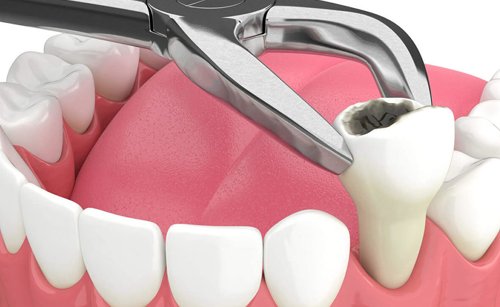
An extraction is the removal of a tooth from its socket. It is recommended when a tooth is too decayed, broken or loose to repair, when it is impacted, or when it is causing crowding or repeated infection. Wisdom teeth are a common example.
There are two main types. A simple extraction is for a tooth that is fully visible in the mouth. It is loosened and lifted out under local anesthesia. A surgical extraction is for a tooth that has not fully come in or has broken at the gumline. It involves a small opening in the gum and usually a few stitches.
Before any tooth is removed, we talk about what comes next. Replacing a missing tooth with an implant, bridge or denture helps protect your bite and the teeth around the space. Knowing the plan ahead of time also makes the decision easier.
Who It Is For
- A tooth is too decayed or broken to restore.
- A wisdom tooth is impacted, painful or infected.
- Advanced gum disease has loosened a tooth.
- A tooth has fractured below the gumline.
- Teeth need to be removed before dentures or orthodontic care.
- An infection keeps returning despite treatment.
Benefits
- Relief from pain. Removing a badly damaged or infected tooth takes away the source of the problem.
- Protects nearby teeth. Taking out a failing tooth can help keep infection or crowding from affecting its neighbors.
- A clear plan. We explain replacement options before treatment, so you are not left with an unplanned gap.
- Written aftercare. You go home with instructions for a smooth recovery and a number to call.
- Honest advice. If a tooth can reasonably be saved, we will tell you.
How It Works
What to expect, step by step.
- Exam and X-ray. We check the tooth, its roots and the surrounding bone, and review your health history.
- Numbing. The area is fully numbed before we begin. You may feel pressure but should not feel pain.
- Removal. The tooth is gently loosened and removed. A surgical extraction may need a small opening in the gum and stitches.
- Aftercare. We place gauze, review home instructions and schedule a follow-up if one is needed.
- Replacement plan. Once the area heals, we can discuss an implant, bridge or denture.
Cost and Insurance
The fee depends on whether the extraction is simple or surgical, how many teeth are removed and the position of the tooth. Replacing the tooth afterward is a separate cost. We give you a written estimate before treatment.
We file claims with all PPO insurance and are in network with Delta Dental Premier. Financing is available through CareCredit, Cherry, Wisetack and Proceed Finance. If you are thinking about replacing the tooth with an implant, the implant consultation is free. Second opinions are free as well.




Real Patients, Real Stories



For my first interaction with the staff at Simply Smiles on the phone to my first visit. Everyone was kind, made me feel comfortable and patient with me. I haven't had the best experiences at dentist but Dr. Szef was amazing at easing my fears and concerns. She took the time to educate me about my care needs and showed completely and that's why I would recommend them to anyone. The whole staff is top Tier.

I was a first time patient, and if I could give Simply Smiles more than 5 stars, I would. I will definitely be back 😊 The staff was all amazing!! They were very informative and very thorough. I absolutely LOVED Hannah as my hygienist as well. Her bubbly personality made my day joyful and she makes you feel very comfortable through the entire process. Keep her! I’ve went to other practices to know she really goes above and beyond. Dr. Sandra Scef was very sweet and really cared for me as well, and at the end of the day, that’s what matters and stands out.

We had a dental emergency when my daughter's spacer broke, and Simply Smiles was fantastic. They got us in the same day , and the team was so kind and efficient with my 7-year-old. Chelcie and the staff explained everything clearly and fixed it perfectly with zero drama. Made a stressful situation so much easier—highly recommend them for anyone needing fast, caring Dental care in Sarasota/ Bradenton area!

Frequently Asked Questions
Does a tooth extraction hurt?
We numb the area first, so you should feel pressure rather than pain. Some soreness afterward is normal and usually eases over the following days.
How long does healing take?
After a simple extraction, many people feel close to normal within a day or two. A surgical extraction can take about a week or longer, depending on the tooth.
What should I avoid afterward?
For at least the first 24 hours, do not rinse hard, spit or brush near the site. Avoid smoking, since it can dislodge the blood clot and lead to a painful dry socket.
Do you remove wisdom teeth?
We evaluate wisdom teeth with an exam and X-rays and will explain whether removal is recommended. If your case is better handled by a specialist, we will tell you and help with the referral.
Do I need to replace the tooth?
In most cases, apart from wisdom teeth, replacement is recommended. A gap can let nearby teeth shift and can change the way you chew.
When should I call the office after an extraction?
Call us if pain gets worse after the first few days, if bleeding does not slow, or if you notice swelling or fever. Our number is (941) 877-5262.